
Most scholarly studies will tell you that criminal offenders are predominately male and victims mostly female. Statistics from most countries support this pattern. For example, while males comprise 89.5% of offenders found guilty of homicide in the United States, females comprise 63.7% of victims of domestic homicide and 81.7% of sex-related homicide.
But gender bias doesn’t apply equally to all crimes. Women and girls seem nearly as prone to commit non-violent crimes for significant material gain as men and boys. Financial crimes are particularly democratic, according to 2011 FBI arrest data. Males constitute 58.7% of fraud arrests, 57.3% of larceny-theft, and only 51.3% of embezzlement arrests, making it clear that women make up nearly half of this category of criminal.
As storytellers often need female villains in their narratives, we need to know what motivates females to commit crimes and how they may go about it. There are many reasons, but inequity has been a major motivator. Throughout history, fewer economic and vocational opportunities have driven women to steal, commit procurement and prostitution offenses, forgery and embezzlement, and so on, to survive. In this post we turn to the history of a fascinating subset of women criminals to continue our exploration of literary villains.
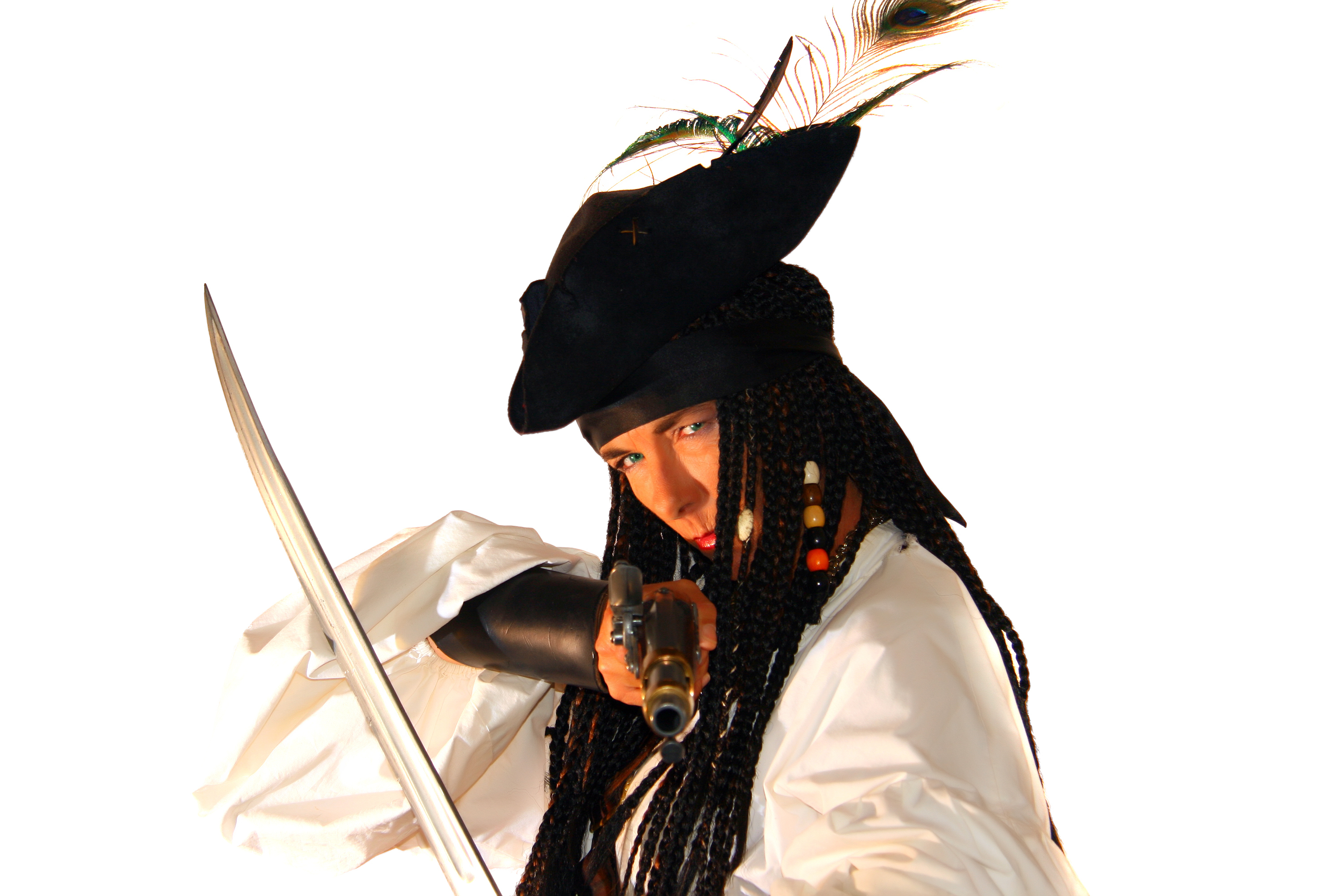
Although far fewer than theft crimes, not all crimes committed by women are non-violent. Histories of female criminals in Europe include surprisingly large numbers of women who impersonated males to commit many different types of crimes. Girls from impoverished backgrounds knew they had few opportunities to support themselves apart from marriage, domestic service or prostitution, boys had more (often dangerous) advantages: they could join criminal gangs or the military. Some females copied their example.

Gender-neutral attire was rare among Europeans until the 20th century. Despite this, significant numbers of women passed as men, especially in northern Europe in the 17th to the 19th century when frequent wars called for fighters and offered heavier clothing that disguised gender differences.
Encouraged by successful temporary cross-dressing experiences like carnival costumes, erotic or stage performances, some women disguised themselves as men to earn a living at war, at sea, or on the streets as cutpurses. But they soon discovered that the successful impersonation of a male for longer periods of time was difficult. The lack of privacy in the lives of the destitute posed special challenges. Throughout much of human history, poorer classes ate, slept, dressed, relieved themselves, and sometimes fornicated in company. How women overcame these obstacles offers fascinating lessons in resourcefulness and determination too extensive to be treated here.
There are histories of the subject. I have been interested in early cross-dressing women since I translated a book from Dutch into English by Rudolf Dekker and Lotte van de Pol, The Tradition of Female Transvestism in Early Modern Europe (Macmillan, London, 1989). This study was among the first to catalogue the histories of women living as soldiers, sailors, (male) robbers or pickpockets primarily in the Netherlands, Germany and England in the early modern period.
The 119 cases investigated by the authors were based on Dutch judicial archives and early popular songs. Some of these sources revealed women who dressed as men in order to join bands of violent street thieves and criminals. For example, Anna Hillighering in 1724 Leiden spent most of her lives as a man. Isabella Geelvinck lived as a man for 15 years before being convicted of theft and arson in Utrecht in 1673. Trijn Jurriaens was found guilty of enlistment fraud, forgery, and being an imposter. She was discovered to be a woman only when she was stripped and whipped for her crimes in 1747. Some women dressed as men to marry women they loved. At the time, this was also a crime. Some lived undiscovered for years, occasionally even by their spouses! Once discovered, however, the responses of both peers and authorities were rarely favorable.
Unless they were exonerated by military success or they returned meekly to a feminine life, these women were often abused, rejected and punished, including by imprisonment, exile, whipping and fines. Their crime was upsetting the ‘natural order of life’.
These women baffled and appalled their contemporaries. For example, after a successful military career, one eminent soldier, Aal the Dragoon, was killed around 1710 in a fight over a card game. So astonished were fierce Aal’s former colleagues to discover that their compatriot was a woman that she was stuffed, placed sword-in-hand on the carcass of a horse, and displayed for nearly a century in a Rotterdam anatomy theatre. Surrounding her were malformed babies and animals preserved in alcohol considered as freaks and unnatural phenomena by scientists and surgeons of the time (Dekker and van de Pol, 1987, p 73).
Although educated elite folks were often more tolerant, being aware of positive literary examples like Joan of Arc, the common people among whom these women lived possessed education and experience too limited to understand these women. Yet despite the rejection and abuse they faced from family and peers, the women persisted.
Writers can never know what memories and experiences will inspire them creatively. This early project gave me the inspiration for one of my youth fiction characters. He dressed as a cleaning woman for his role in The Great Brassmonkey Bay Jewel Robbery. His objective, like most of the women in these stories, was to be free to live life as he wished. Stories of undaunted persistence show readers how women who were considered historical villains have been elevated by literature to become modern heroes, leading the battle against intolerance.
 The Artful Gluffster