Going Global has been a business mantra for decades, but times have changed. Among so many other disadvantages, COVID-19 is negatively impacting affordable access to books worldwide. Authors want books in readers’ hands, not in warehouses. They know not everyone wants to buy an e-book. So when print books are concerned, more authors are thinking regionally–and if they can, locally–for printing and distribution. And they are making deals with traditional publishers to print local editions, or they are buying from the publishers in bulk and making deals with regional book stores and online booksellers.
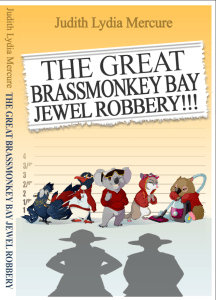
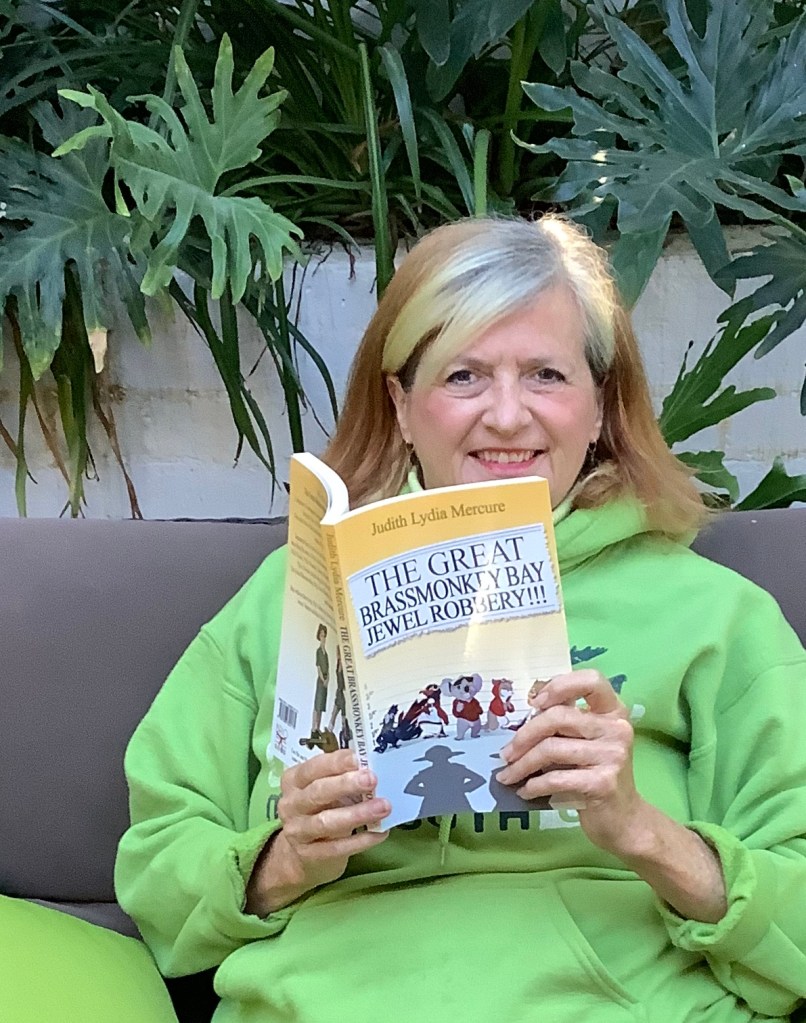
For example, if you live in Australia or New Zealand, where part of the action in the new YA novel, The Great Brassmonkey Bay Jewel Robbery, is set, please don’t buy from mainstream online retailers.
If you do, you could be paying twice what you need to!
Freight delays related to sharp reductions in flights, massive postage cost and exchange rate increases means ordering the book from international booksellers will cost readers outside the US $A38 and take 4-8 weeks to reach them.
Since the end of 2021, boutique YA bookseller, Beachside Bookshop (Shop 20, 11-13 Avalon Parade, Avalon Beach NSW 2107 Australia, +61 2 9918 9918) and popular coffee and bookshop, Bookoccino (66 Old Barrenjoey Rd, Avalon Beach +61 9973 1244) have become the first of several prospective local partners to begin selling The Great Brassmonkey Bay Jewel Robbery for A$19.95. That’s half what regional buyers would pay if they ordered from online retailers. And they won’t wait as long to get it!
So if you live in Australia, New Zealand, and neighboring countries and you are interested in the book, please contact the local suppliers:
If you are in a position to drop by these shops, so much the better! Not only will you save postage, you will meet bookshop owners who love and know all about books, recent and classic. .
So just as COVID-19 means living locally, it means buying locally. As other affordable regional outlets become available, we will post links to these on our author website, book website, blog, Twitter, and FB pages. If you want to know when stock will be available in your region, if outside the US, please contact us!
For US buyers, the book has been reviewed on Goodreads and Amazon and is available from Amazon, Barnes&Nobles, and many other US outlets for US$19.95. Postage within the US is US$5.99. Check some recent reviews here
Judith Lydia Mercure: “Thanks for sharing your thoughts with The Artful Gluffster, Eliza. And thanks too for designing our blog banner! You were born in Umbria, Italy, you live in Berlin, and you work with book, comic, and film publishers and writers all over the world. You were trained both as an illustrator and a fashion designer, which have very different skill sets. Being a good illustrator must help with fashion design, but does being a fashion designer help you as an illustrator?”
Eliza Bolli: “Sadly my experience with fashion design as a working environment was rather unpleasant. I would describe it as a ‘Devil Wears Prada’ situation without the glamour—so I quickly decided that I wasn’t cut out for it. Training for the job was fascinating and very compelling, though. I did benefit greatly from the constant exercise of identifying patterns and visual rhythms in everything I laid eyes on. It was during my Fashion Design Academy years that I truly grasped the concept of “finding inspiration in everyday events and circumstances”.
JLM: “Illustrators have to balance what is recognizable against what is distinctive. You were involved in the creation of The Great Brassmonkey Bay Jewel Robbery characters for over a year, developing some Southern Hemisphere birds and animals you’d probably never seen outside of Youtube videos. Koalas are iconic all over the world, particularly since the Australian 2019-2020 Black Summer fires, so how did you create a unique koala like Chilli?”
EB: “First and foremost: you gotta watch many koalas. So, so many koalas. The trick is to form an extensive visual library of koala-features: fur patterns, color palettes, eyes shapes, pose ranges… that you can engineer in a unique way. I find that the more plausible a character is, the better it will be perceived and received: a well-characterized koala, with its grey fur and huge nose, will work better than a koala that’s been designed with blonde fur and blue eyes just for the sake of originality.”
JLM: “How does that compare with creating a plausible image and persona for, say, a less familiar Abbott’s Booby or a Magnificent Frigate Bird, both unique, endangered birds found only on Christmas Island?”
EB: “That’s where characterization comes into play: the personality traits must be added to the design in the form of posture, expressions and mannerisms. With good character writing as a guide, a flock of white sheep can be rendered as a group of highly distinctive individuals. With subjects as flamboyant as the Christmas Islands bird species in the book, it’s even easier!”
JLM:“Some of your illustrations are engaging for children, some edgier, for adults and young adults. Do you have a favorite audience?”
EB: “From Teens up. Because those group allows my artworks to convey a whole array of undertones that younger children might miss, such as humor in all of its forms. But importantly, younger readers often prefer “simpler” designs (at least in the clients’ views; I often wonder what children think about this). And I just like details too much.”
JLM:“How would you describe your style?”
EB: “Disney-ish with a sprinkle of Leyendecker, maybe?”
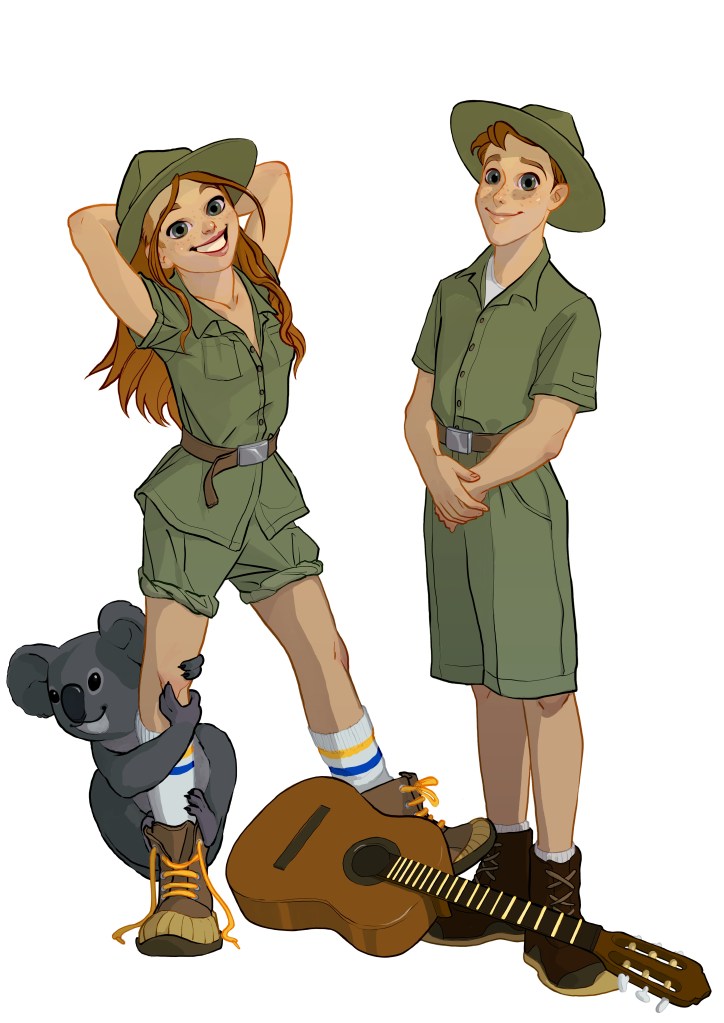
Eliza created teen twins Pip and Pax for the Great Brassmonkey Bay Jewel Robbery (c) Brio Media 2020
JLM: “As an artist, what is your responsibility to your characters? For example, how do you feel about anthropomorphizing animal characters, especially endangered species whose habitats, behaviors, and even existence are threatened by human excesses?
EB: “My personal responsibility towards my characters mimics my personal moral code. There is a specific cluster of subjects that I refuse to represent with my craft as paid work. Anthropomorphizing animals doesn’t trouble me. Like many kids, I grew up watching Donald Duck eat chicken legs and seeing happy pigs as butcher shops’ signs. In fact, I designed one of those signs! Depicting an animal standing on hind legs and wearing a hoodie like the Magic Island Gang is not intrinsically troubling for me. If I were asked to draw it poaching elephants for ivory, or doing something else that demeans any character, human or otherwise… that’s another matter entirely!”
JLM:“The Artful Gluffster focuses on how technology and marketing is changing the arts. Apart from access to new graphics and communications tools, what strikes you most about how technology is changing your industry and the expectations of the audience?”
EB: “Technologies are helping more and more people get in touch with their creative side without submitting to a classic training. For professionals, a growing toolkit of resources is helping cut completion times and helping enhance our results. Meanwhile, social media and communication tools allow everybody to discover talented people beyond geographical boundaries. But while technology gives us amazing tools, it is not what shapes our industry. It isn’t Photoshop that demands complex artworks at derisory payments. It isn’t Instagram’s fault if more and more jobs are awarded to creatives from developing countries. It isn’t Pinterest that steals a humongous amount of original art from online portfolios and uses it without paying royalties. That’s capitalism operating in ethically unregulated free-market economies. We know elite artists experienced fair-pay challenges by exploitative patrons in the past too. But the experience is too commonplace now.”
JLM: “Let’s get hypothetical: Would Michelangelo or Caravaggio have been as great as artists if they had trained on Photoshop and Illustrator?”
EB: “I’m pretty sure they would be even better…”
JLM:“Would they have been as successful if they had had to market their personalities and networks on the Internet before anyone would look at their portfolios?”
EB: “Now that’s a game changer. Michelangelo wasn’t known for being a socialite so I doubt he would have bothered to open an Instagram account to begin with. Caravaggio would have wasted too much of his creative time trolling away as he was a renowned troublemaker. Leonardo would have done great in my opinion. The guy just loved to dabble with technologies. He would probably work at Boston Robotics now!”
JLM:“The Great Brassmonkey Bay Jewel Robbery was a relatively small job. Is there anything about such jobs that are worthwhile for you?”
EB: “I was delighted to work on TGBBJR: it gave me the opportunity to further develop my character design skills by drawing adorable and fascinating animals–and it was for a cause I think is noble. My 10 year-old self (a long-time WWF member, animal-nerd, bookworm, wannabe ethologist and Disney animator) can finally be proud of me!”
Judith Lydia Mercure: I’d like to welcome the Principal of Australia’s Inkwell Films, Stephan Wellink, to ‘The Artful Gluffster’. After a stellar career in universities and research organizations taking scientific products and research to the marketplace, Stephan made a remarkable career move several years ago. He entered the film industry, arguably one of the hardest industries one can imagine breaking into without a deep network of professional contacts. Stephan made a name for himself and Inkwell and showed aspiring film makers that this was possible. He made four documentary films in a little over a decade, most celebrating the careers of extraordinary personalities in the entertainment industry. That is exceptional in an industry where many people spend decades trying to make one film.
Sir Ben Kingsley chats with Stephan Wellink about a transformed industry’s change agents
JLM: Stephan, you were educated as a scientist. Yet your 2006 ‘Winners’ Guide to the Nobel Prize’ was your only film celebrating excellence in science. What made you decide to make documentaries about the lives and work of Sam Spiegel, Jerry Lewis and Rod Taylor–all known for excellence, but in the very different domains of film production, comedy and adventure?
Stephan J Wellink: “I like character-driven narratives and I believe I can pick a good story. The films I have made have a similar theme despite the different professional settings: facing seemingly insurmountable challenges, the protagonist succeeds against the odds. In the ‘Winners’ Guide to the Nobel Prize’Marshall and Warren were ridiculed by the medical establishment and the pharmaceutical industry for reporting their observations that ulcers were a consequence of a bacterial infection (helicobacter pylori) and not lifestyle. Winning the Nobel Prize justified their courage.
The film industry heroes we chose also battled through enormous opposition. Rod Taylor took a chance as a relative unknown by leaving Australia for 1950s Hollywood. Through hard work and talent, he became a movie and television star, handling the crossover between these mediums effortlessly, despite it being a time when movie stars would not usually lower themselves by appearing on television. Rod succeeded at both, setting a precedent for other Australian actors, and he went on to appear in films made by legendary Directors George Stevens, John Ford, Alfred Hitchcock, Antonioni and Quentin Tarantino.
Jerry Lewis proved he was more than a sidekick and stooge for Dean Martin by becoming an auteur. He introduced innovations that revolutionised film production. His film The Nutty Professor is a hilarious retake on a literary classic, Dr Jekyll and Mr Hyde. When we interviewed Martin Scorsese, a big fan of Lewis, Scorsese told us that this film inspired his filmmaking.
Sam Spiegel took on the big film studios and pioneered independent filmmaking. His battles with powerful studio heads such as Harry Cohn, Louis B Mayer and Sam Goldwyn are part of Hollywood folklore. Entirely on his own, Spiegel packaged The African Queen, On the Waterfront, The Bridge on the River Kwai and Lawrence of Arabia. He is the only person to win three Oscars as a sole producer—for all but the first of these films.”
JLM: “Have you discovered big differences or surprising similarities between the industries surrounding film and science? Do you have any advice for aspiring film industry entrants?”
SJW: “There are similarities in how science and film projects are realized. In simple terms: science and film projects start with an idea. Both involve teams of creative, talented, opinionated and passionate people. They need to be managed so their creativity is encouraged while being reminded that they need to deliver quality products – whether a finished film or research results people and industries need. Both scientists and film industry professionals sometimes need to be reminded to focus on their audience as customers. And that they need repeat business to keep doing what they do.
I have the following advice to anyone wanting to enter the film industry (mostly excluding performers). Try to:
become attached to a film unit.
find a mentor.
work out what you are good at doing. (Is it directing? producing? writing?)
hone your craft.
make a short film. (Then make another short film.)
study the works of filmmakers.
study the history of film.
find your own style and voice.
don’t mortgage your house for a film. (It’s a movie, not your life.)”
JLM: Three of your films focus on luminaries with full and celebrated histories in the film industry. Did you worry that their stories had already been thoroughly mined?
SJW: That’s a good question. For a biographical film, it’s important to have detailed knowledge about the life and work of the person whose story you want to tell. In the case of Rod Taylor, Sam Spiegel and Jerry Lewis I watched as many of their films as possible, read books, news clippings, watched interviews and I spoke to historians about the cultural significance of their work. I ask myself a number of questions before committing time and resources to any biographical project:
Is it interesting?
Has it been done before?
Is the subject alive and accessible?
Are people close to the subject accessible?
What are the sources of investment?
Who are the potential producing partners?
What story should we tell?
How will we tell it?
What’s the best distribution route to market?”
JLM: What made you choose these particular people?
SJW: “We were fortunate to have access to Rod Taylor and Jerry Lewis in person so we were able to get their own accounts of their life and work. In both cases we wanted to emphasize what was unique about their work. For Rod Taylor it was about being a trailblazing Australian who made good on the biggest film stage in the world – Hollywood. For Jerry, the title of the film is Jerry Lewis: the Man Behind the Clown. That tells it all. Wefocused on his artistry beyond the ‘Martin and Lewis’ double act. He was an innovator. Like Chaplin, he was a great artist able to write, direct, produce and star in his own films.
Although Sam Spiegel passed away in the early 1980s, we were able to interview actors, writers and historians who knew and/or worked with him. Sam was a great filmmaker. His story was as much about a changing industry as his career. He was known as a being ‘very fond of women.’ We began production before the #MeToo movement. It was interesting to hear from women who were at the time of our interviews aged in their late 70s through early 90s. They compared Sam’s interactions with them with Harvey Weinstein’s , which led to insights into changes in what is tolerated or even encouraged in an industry. So we were able to talk to women who could provide context for this aspect of the industry.”
JLM: Our blog explores the challenges and opportunities that are arising in arts fields traditionally dominated by big studios and publishers, iconic awards and relatively few high-profile players. What have been your greatest discoveries, disappointments, and surprises in a changing industry?
SJW: “My greatest discoveries? Producing a finished film is a minor miracle!
My greatest disappointments? We (and I am speaking here as an Australian film maker) don’t value the creative industries as highly as we should.
My greatest surprise? There is great respect internationally for Australian creatives.”
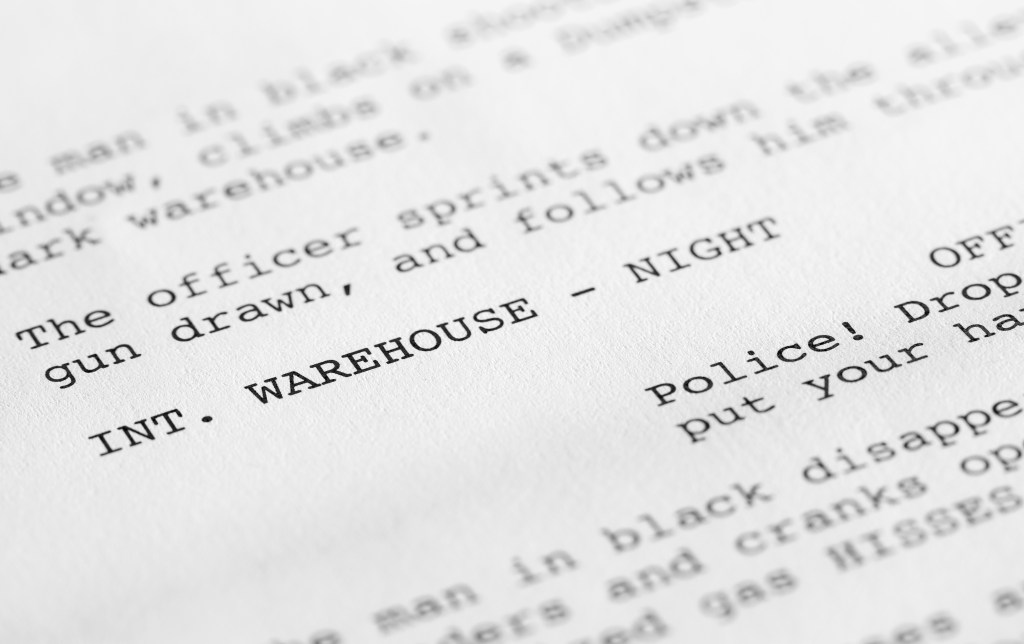
Many films begin as books. Relatively few books begin as films. But there are benefits of and good reasons for writing your book first as a script, and then writing a novel based on your script, instead of the other way around.
Admittedly, the art forms are very different. Scriptwriters have different expectations from novelists. Words hardly matter in the early stages of a film’s development. In fact, visual storyboards are common early drafts. Action, characters’ development, and the outcomes are considerations that help writers structure good scripts. Films live or die on structure, plot pace, and the quality of their cinematography. Often, if a production is seriously considered, scriptwriters will be changed between drafts. A script is hardly ever your baby.
By contrast, a novel is always your baby, and you can smother it with love. Novelists love words. They love the freedom a novel gives them to move between time, setting, voice, mood, gender. Unconstrained by the limitations of a stage or a screen, novelists have the freedom to emphasize sensory effects other than the visual in their writing. Novelists can write thousands of pages. Scriptwriters? They can’t.
But here are a few reasons I have found it worth the work of starting a literary creation with a script, an approach I used with The Great Brassmonkey Bay Jewel Robbery.
First, it is commonly observed that many novelists could cut (part or all of) their first chapter and it would improve their story. So writing the first draft of a work as a script disciplines the writer to focus on the storyand its essential message within a framework: one page a minute for a 2-hour film, for example.
Second, the pace of your story will be tighter and more active. As mentioned above, the art of structuring a movie is very different from that of a book. Scriptwriters often start by sketching a series of scenes briefly, often on note cards, and ordering them on a table or desk, to get a sense of the visual flow of the work. Scripts move from action moment to action moment. If you start writing a new work with a script, you’ll be less likely lose the readers attention by spending too much time setting the mood and describing the background. Making love to your words is about you showing what you can do. Scenes and images are about viewers.
Third, your dialogue will be more effective and convincing. Writers are constantly warned to ‘show, don’t tell’ their characters’ personalities and actions. If you write an exchange of banter in your first draft script, your characters will show your readers how witty, mean, or funny they are. Scripts also expose gaps we can miss in novels. Table reading a script with friends is a great way to pick up on dialogue dissonance and discover new plot directions.
Fourth, if done consistently, the ‘voice’ you create for your characters will differentiate them, create tension or attractions between them, and help drive the plot.
Fifth, dialogue-driven action and characters is more respectful to your readers. Readers like to make up their own minds about characters, their motivations, and their choices. They don’t like to be told what to think about them.
Sixth, the novel may help sell your film. Most novelists dream of getting a film option on their book–so much so that many works are written to optimize that possibility. It can take a few years to write and a year or more to publish a book but it often takes decades to produce a film. Producing a films costs millions, so investors are less likely to back a script, no matter how good, written by an unknown. Best-selling books are far less costly to publish and market and often sell film scripts by producing hard evidence of success with audiences.
Finally, if you think you might want to create a film or play, rewriting a script from the novel is much easier than writing a script from scratch. The hard work has been done, sales results of the book tell you whether it’s worth the effort of finding and convincing financial backers, and the second draft of a script will be more nuanced and effective.
Rewriting a book is really hard work. Creating a draft as a script can make the action come alive for the author as well as future readers!
Book launches during a Pandemic certainly pose challenges. No one wants to put readers and bookstore staff and customers at risk by organizing face-to-face readings and talks. But there are other opportunities for readers to talk with authors whose work interests them.
We are all familiar with book trailers and reviews as means of getting information about books, but many readers are also interested in hearing the author read from and describe the creative journey that resulted in their books. With more book clubs meeting by Zoom and other conferencing systems these days, growing numbers of authors are happy to drop in to meetings for discussions and readings by Zoom, regardless of where the audience may be. Short video readings from my own latest book, The Great Brassmonkey Bay Jewel Robbery, both by me and by invited guest readers, have been posted as teasers on Youtube and shared on this eqine as well as on the author and character websites. I have also joined meetings and participated in interviews by Zoom, and while those are different experiences from face-to-face meetings, a big advantage is that I can go almost anywhere, almost any time. For more information about Zoom visits and readings, email jlm@judithlydiamercure.com for details.
The Great Brassmonkey Bay Jewel Robbery is now available from bookstores and online retail providers everywhere. In addition, the publisher, Brio Multimedia, is offering the book through regional booksellers to avoid exchange rate fluctuations and delivery costs and delays. Check http://www.judithlydiamercure.com for updates.
Most of us look at reviews when considering whether to buy or subscribe to a new book or film, whether in print or downloaded. So if you are an author of a recently published book or the producer of a film, getting reviews to your target audience is essential. In addition to obvious important review sites like Amazon and Goodreads, you can try writing reviewers, bloggers, journalists, and groups that may be interested in your book; however such communities of interest are proliferating wildly and getting more specialized and varied in quality, so you can easily spend all the time you hoped to spend writing chasing reviews.
Getting reviews can also be expensive. In addition to providing free copies of your book, you may have to pay for reviews. You can get help in your search for free (and hence more credible) reviews, but it often comes with strings attached. While searching for reviewers of books similar to mine, I came across BookSirens.com. The company is an interesting example of many new enterprises that have emerged to sell marketing services to small, independent, and self publishers.
It works like this: If you register as a member willing to review books, BookSirens will help you publicize and possibly sell your reviews. The attractiveness of your reviews are based on your profile on Goodreads, Amazon, or other review sites.
As a new BookSirens member, you register your preferences for genre, the types of publishers you will accept review copies from (mainstream, independent, self-publishers), formats you accept (PDF, paperback and hardcover), and whether you wish to be paid or if you will review for free.
Then BookSirens analyzes your past reviews and creates a sophisticated profile of you as a reviewer with graphs and pie charts.
The number of books you have reviewed in the past is analyzed by genre, historical period (eg Contemporary, Historical, Futuristic) and character type (eg Adult, Young Adult, Animals, Family, Spies, American, European, etc) and any theme preferences you may have (eg hero’s journey, coming of age, romance), based on the books you have read and reviewed. Then your ratings are compared to other reviewers by each of these attributes.
An astute author or publishing marketer will be able to determine whether a reviewer with one of more of these preferences is more likely to give you a positive review. There are some shortcuts to getting convincing reviews without buying them. The Frugal Book Promoter by Carol Howard-Johnson will help you make a good start: https://www.goodreads.com/book/show/12493189-the-frugal-book-promoter
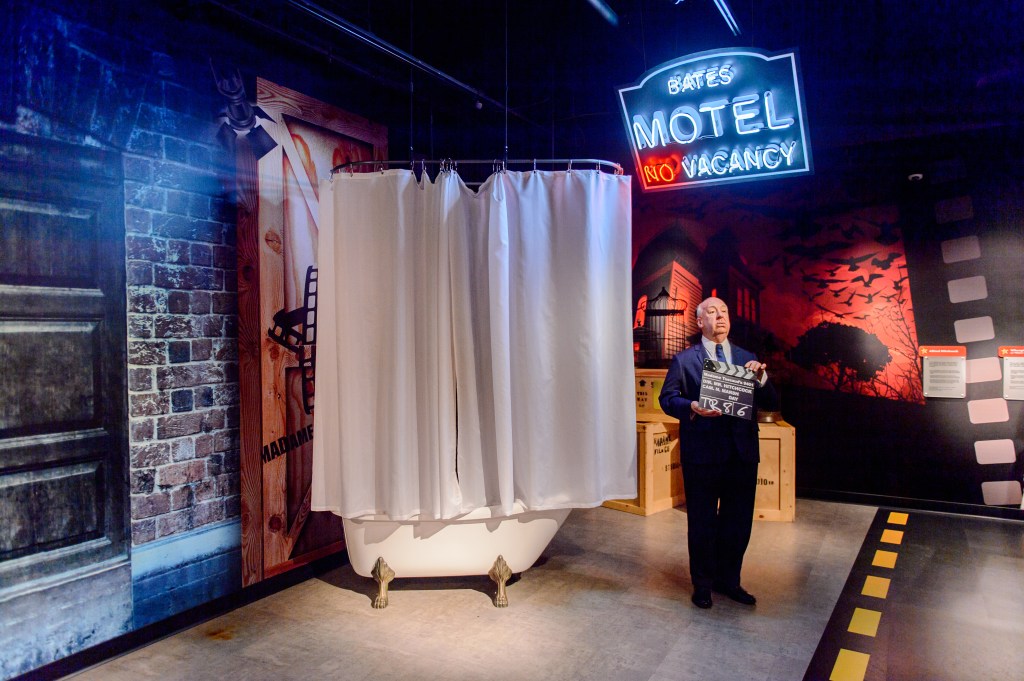
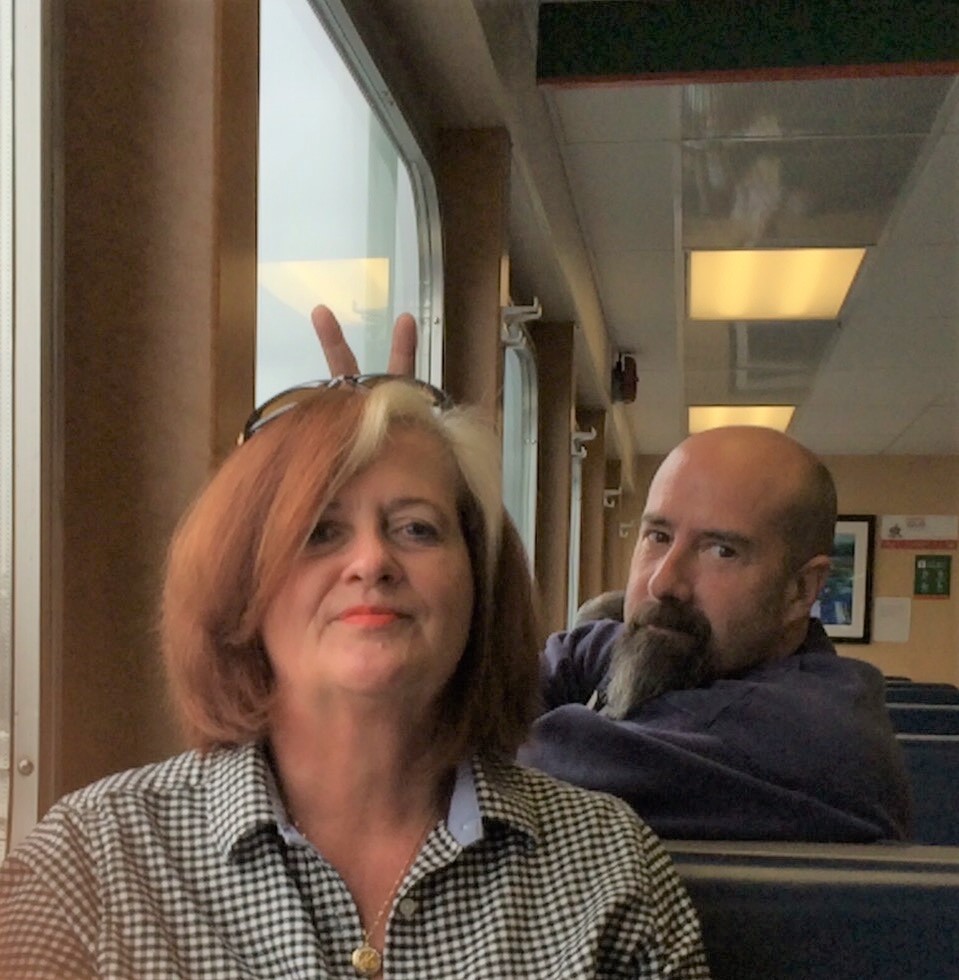
Long before social media and phone cameras gave us the photobomb, Alfred Hitchcock was infamous for putting himself into his films as an obscure character or ostensible crowd scene extra. But why? Of course, a part of his motivation may have been vanity. Why should actors get the all the glory? Certainly, many Directors followed Hitchcock’s model. Martin Scorsese notably gave himself a part in Taxi Driver. In films, this practice was usually referred as a cameo, a brief appearance or voice part by a famous person in a performance.
Popular actors have often been given cameo roles, presumably by Directors, to add depth and novelty to films. Keanu Reeves’ send-up of himself in Always Be My Maybe and Paul McCartney’s appearance as Jack Sparrow’s uncle in Pirates of the Carribbean (in which he sings ‘Maggie Mae’ from the Beatles’ album ‘Let it Be’) are audacious in-jokes, fun to spot, hugely entertaining, and often the stuff of cult films. The practice was and continues to be highly successful as a creative marketingtactic.
Cameos appear in other art forms for cathartic reasons. In paintings, graphic artists have often elevated those they adored into gods or heroes. Sometimes, they graphically eviscerated unfaithful lovers. Indeed, Hieronymus Bosch shredded plenty of chaps he wasn’t fond of in the maws of monsters, boiled them in lava, or drowned them in fecal soups, and I’m sure it made him feel better.
Fiction writers also get a kick out of cameos. They appear to have done so for ages. Among the authors who have inserted themselves into their own narratives were Geoffrey Chaucer, Orhan Pamuk, Martin Amis, Ray Bradbury and Stephen King, among many others. Sometimes authors deliver enlightening instructionalcommentary to clarify the plot or the author’s perspective.
Some authors create straw-man characters in their own image and then attack them for their weaknesses. It beats getting sued for defamation. This isn’t always a popular technique, however. Ray Bradbury is reported to have appeared in some of his own books and in so doing offended some readers who considered themselves perfectly capable of unraveling plot twists or deciphering the story’s moral message unaided.
The temptation to insert the artist into the artwork is, therefore, not rare. Personally, I believe the reasons for this are perfectly understandable. It may be in the nature of artists. They can’t help themselves. Scriptwriters often report that they ‘hear voices’ of their characters in their heads when writing a performance or film script. They mentally rehearse dialogues between multiple characters. The temptation to slip into someone comfortable must be as irresistible as a frothy bit of underwear (or none at all) when someone delicious is dropping by. Because it is fun. It is how artists play–which is what at least some art should be.
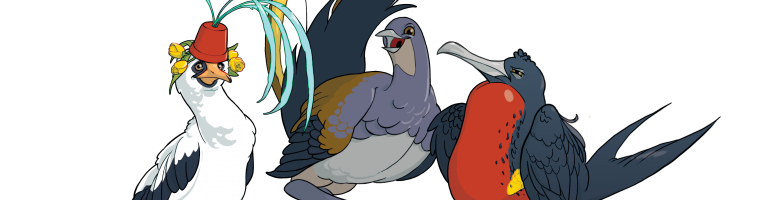
Speaking for myself, why do I use literary cameos? The three birds (in the masthead) who become the Bush Telegraph at Brassmonkey Bay Zoo are observers and commentators of the Shakespearean ilk. A Superb Lyrebird and a Magnificent Frigate bird (those are their actual taxonomic handles, by the way) are obviously avian celebrities. Who would fail to be tempted to create cameo spots for them? Moreover, as anyone who has read The Great Brassmonkey Bay Jewel Robbery knows, they are also Gluffmeisters and deservedly represent the personality of this blog.
But when I hid the modest ‘Gran’ behind the curtains in The Great Brassmonkey Bay Jewel Robbery, I was perfectly aware that she was…me! Why did I create her? She doesn’t illuminate the action. I didn’t really want to identify with an elderly stereotype waggling an educational finger at the young twins, Pip and Pax.
Gran’s job–and mine–was simply to cheer on the twins. She loves them, she wants the best for them, her opinion is important to them, and she wants them to know that she wants them to follow their dreams. Her point is emphasis. Encouraging readers is one reason why we might decide to write in general and why we might write cameos into our stories in particular.
The winner of the latest Kenneth Allen Marcure Scholarship overseas for their teacher training was announced by Brio Multimedia.
The fourth recipient of the Kenneth Allen Marcure Memorial Scholarship is a University of Montana social studies and education student. Timothy Severson spent the Spring semester of 2017 teaching students in Tamil Nadu, India. Timothy, who has minored in Central Southwest Asian Studies, says he wanted to use his time in India to “help break down barriers and negative mindsets in students,” among others. He added, “I would like to meet and talk with teachers from different backgrounds. I am hoping to learn about the skills they employ when teaching students from such varied backgrounds. How do they stay culturally relevant? In turn, I want to learn from the students how studying in such a unique environment has affected their education.”
These annual Scholarships honor Kenneth Allen Marcure, international humanist and educator, who maintained his commitment to international education despite battling ALS (MND/Lou Gehrig’s Disease) for five years. Hailing from Idaho and Montana in the USA, Marcure made it his life work to encourage young people, oppose resource inequity, reduce prejudice, and lower barriers to intercultural understanding and good will. He worked with students in Japan for over 35 years.
“It was Kenneth’s vision to use education to reduce misunderstandings between people from different countries,” a Brio Multimedia spokesperson said. “Supporting young teachers is a particularly effective way to reduce cultural and racial intolerance. In the course of a single professional lifetime, hundreds of young students may have their horizons broadened by a teacher from another culture. To have the opportunity to start their careers with an international training opportunity has been a transformational experience for past scholarship winners.”
“The partner for the past three years has been Kenneth’s undergraduate alma mater, the University of Montana, where Ken’s lifelong commitment to global good citizenship was sparked by the example, among others, of visionary academic and senator, Mike Mansfield. Teaching internships overseas have helped previous awardees better understand other cultures, educational needs in those countries, and the daily discipline of teaching.”
Past awardees have included UM students, Lea Christensen, who successfully completed her student teaching in India in 2015, and Megan Croke, who pursued her teacher training in India during the 2016 academic year.
The inaugural Kenneth Allen Marcure Memorial Scholarship was awarded in 2013 to Tilly Torpey, a student selected by the Director for Education of the Coeur d’Alene Tribe for her academic performance and desire to share her culture with others.
More information about the Kenneth Allen Marcure Scholarship Fund is available at http://www.briofun4good.com .
At the risk of sounding immodest, I’m pretty sure I have the best definition of the word ‘gluff’ , even though Collins dictionary offers a sad version of it–as a sweet, sticky substance covered with fluff–like a caramel left in your pocket on a hot day.
My version is both a noun and a verb. It’s basic noun forms are ‘gluff’,‘gluffster’ and ‘gluffmeister’. It means to bluff, glibly. Audaciously. Shamelessly, really. It includes the result of gluffing, which is a gluff.
I invented the gluff to address an unmet need. (Actually, I admit it was a group invention, created with friends at a party, as ideas we think at the time are our best so often are.)
Not too long ago, we began to encounter gluffsters everywhere, using the virtual podium the Internet has given us all. Although almost everyone seems to indulge in a moment of gluffing now and again, some enthusiasts seem particularly good at it. These people are gluffmeisters.
There is no restriction on the subjects gluffsters and gluffmeisters will take on. Although there should be an element of interesting plausibility in a gluff–to distinguish it from utter nonsense–creators require only one qualification for the role: shamelessness.
But even shameless loquaciousness isn’t enough. A good gluffster has to be interesting enough to make us think and entertaining enough to make us want to listen. A gluffmeister should introduce ideas provocative enough so we see the world differently, witty enough to motivate us to pass them off as our own.
We all know gluffsters and even some gluffmeisters. Professionally, they are known as journalists, authors, performers, scriptwriters, marketers, critics, teachers, philosophers, and politicians. This blog is a soapbox from which almost anyone may gluff about story-telling, the universal and changing insights we apply to our creation, dissemination, and understanding of the narrative arts.
Stories can be about anything, but the best lift the human spirit, inspire, console, engage, and make us weep, smile, reflect, and sometimes even transform us. But what makes one version of the fifty basic plots that encompass all stories invented by humankind seem fresh? Our engagement with and enjoyment of stories intensifies when we discover and share new perceptions and interpretations of the world we live in.
Like the salons and coffee houses of the past where interested people gathered, the Internet is the new home of gluffsters. Please join me here.
On reflection, do you think Collins’ definition of a gluff–as something sweet, covered with fluff–and the one used to describe what is practiced here might have something in common after all?
Processing…
Success! You're on the list.
Whoops! There was an error and we couldn't process your subscription. Please reload the page and try again.




 The Artful Gluffster