Category Archives: Judith Lydia Who?

A short bio of Judith Lydia Mercure, author, journalist, Nature lover. Author of the Magic Island Gang series of family adventure novels.

Interview: Judith Lydia Mercure Talks About Who and What Gets Her Writing

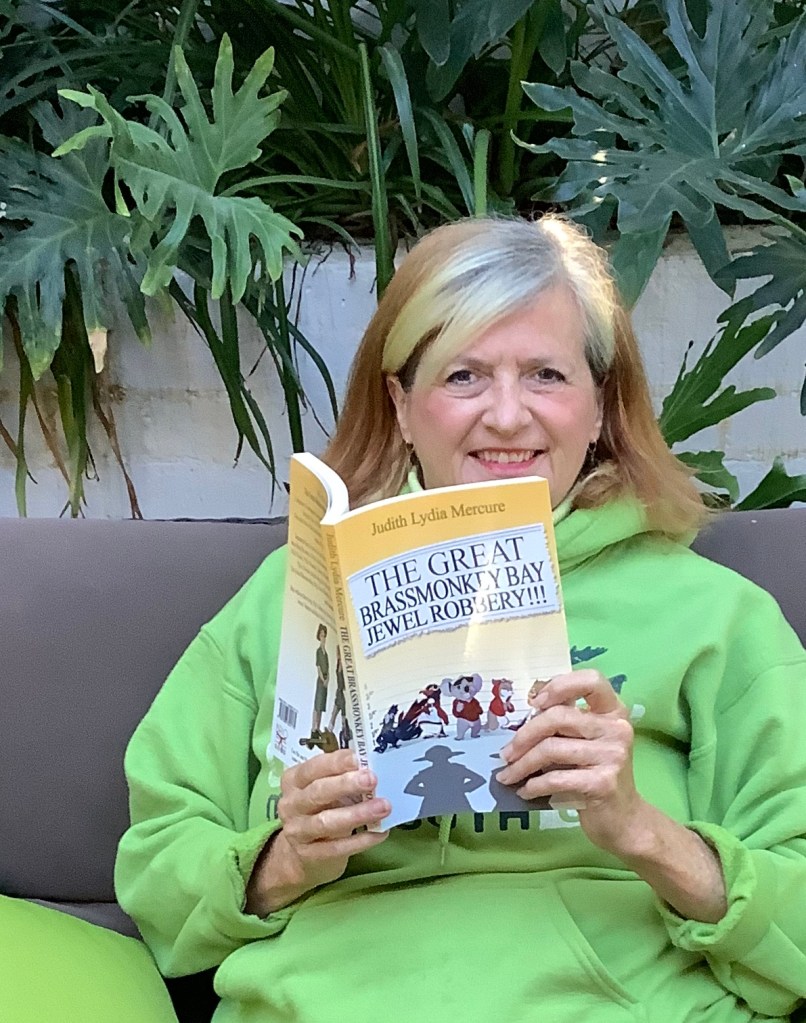
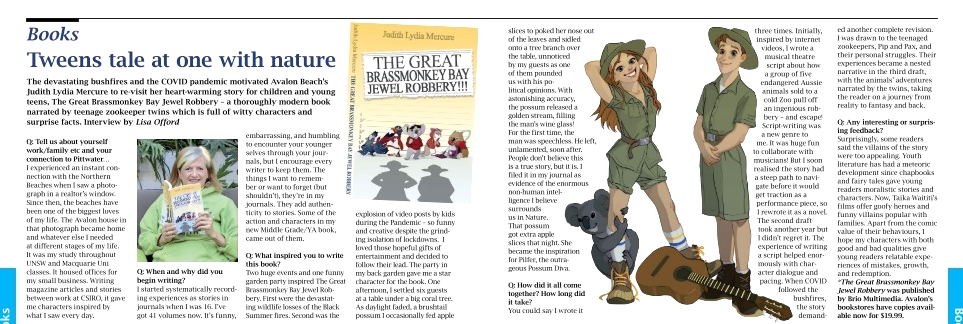
Pittwater Life Editor Lisa Offord asked Judith Lydia Mercure about what motivated her to write books for young audiences during what seems to many to be a period of relentless crisis (originally published in Pittwater Life, September 2021, pp 50-51). Local (Avalon Beach) bookstores Bookoccino and Beachside Books stock Judith Lydia’s latest book, The Great Brassmonkey Bay Jewel Robbery for A$19.99.

Lisa: Tell us about yourself work/family etc and your connection to the Northern beaches.

Judith Lydia: I experienced an instant connection with the Northern Beaches when I saw a photograph in a realtor’s window. Since then, the beaches have been one of the biggest loves of my life. That Avalon house in the photograph became home and whatever else I needed at different stages of my life. It was my study after UNSW and Macquarie Uni classes. It housed offices for my small business.  Writing magazine articles and stories between work at CSIRO, it gave me characters inspired by what I saw every day.  

Lisa: When and why did you begin writing?

Judith Lydia: I started systematically recording experiences as stories in journals when I was sixteen. I’ve got 41 volumes now. It’s funny, embarrassing, and humbling to encounter your younger selves through your journals, but I encourage every writer to keep them. The things I want to remember or want to forget (but shouldn’t), they’re in my journals. They add authenticity to stories. Some of the action and characters in my new Middle Grade/YA book, can be found in them.

Lisa: What inspired you to write this book?

Judith Lydia: Two huge events and one funny Garden Party inspired The Great Brassmonkey Bay Jewel Robbery. First were the devastating wildlife losses of the Black Summer fires. Second was the explosion of video posts by kids during the Pandemic—so funny and creative despite the grinding isolation of lockdowns.  I loved those hopeful gifts of entertainment and decided to follow their lead.

The party in my back garden gave me a star character for the book. One afternoon, I settled six guests at a table under a big coral tree. As daylight faded, a brushtail possum I occasionally fed apple slices to poked her nose out of the leaves and sidled onto a tree branch over the table, unnoticed by my guests as one of them pounded us with his political opinions.

With astonishing accuracy, the possum released a golden stream, filling the man’s wine glass! For the first time, the man was speechless. He left, unlamented, soon after. People don’t believe this is a true story, but it is. I filed it in my journal as evidence of the enormous non-human intelligence I believe surrounds us in Nature. That possum got extra apple slices that night. She became the inspiration for Pilfer, my outrageous Possum Diva. 

Lisa: How did it all come together? How long did it take?

Judith Lydia: You could say I wrote it three times. Initially, inspired by internet videos, I wrote a musical theatre script about how a group of five endangered Aussie animals sold to a cold Zoo pull off an ingenious robbery—and escape!

Script-writing was a new genre to me. It was huge fun to collaborate with musicians. But I soon realised the story had a steep path to navigate before it would get traction as a performance piece, so I rewrote it as a novel.  The second draft took another year but I didn’t regret it. The experience of writing a script helped enormously with character dialogue and pacing.

When COVID  followed the bushfires, the story demanded another complete revision. I was drawn to the teenaged Zookeepers, Pip and Pax, and their personal struggles. Their experiences became a nested narrative in the third draft, with the animals’ adventures narrated by the twins, taking the reader on a journey from reality to fantasy and back.

Lisa: Any interesting or surprising feedback from readers you’d like to share with us? 

Judith Lydia: Surprisingly, some readers said the villains of the story were too appealing. Youth literature has had a meteoric development since chapbooks and fairy tales gave young readers moralistic stories and characters. Now, Taika Waititi’s films offer goofy heroes and funny villains popular with families. Apart from the comic value of their behaviours, I hope my characters that have both good and bad qualities give young readers relatable experiences of remorse, change, and redemption.
Leave a comment

Filed under Crafting Stories, Getting Noticed, HOME, Judith Lydia Who?

Hopeful Arts Brands

There is an increased tendency of creative industries to attach charity sponsorship or social issues spokesmanship to their brands. What about the story-tellers’ arts? They are no exception.

After all, we are a species that thrives on narratives, according to the management team behind Brio Multimedia, a social enterprise that produces youth entertain and uses proceeds to support scholarships and ‘rewilding’ organizations. If you ask them, it’s a good fit. Humans are a noisy, gossiping, fibbing, complaining, idolizing, yakking species. There is nothing new about this notion. The Brio team point out that for years social scientists have suggested that story-telling–indeed communication in general–is the equivalent of our ancestor primates grooming each other for comfort, affection, good health and hygiene.

Brio Multimedia’s goal is to share stories with young readers, they say. But not just any stories. Brio folks will tell you that stories are entertainment–and so much more. Their arguments for what they do and why are drawn from what many would consider a reference list of classic studies on literature and entertainment for young audiences.

They will tell you, for example, that in his book, Uses of Enchantment, Bruno Bettelheim, a child psychologist and Holocaust survivor, wrote in 1975 that fantasy and fairy tales, for example, have traditionally provided a safe introduction for children to help them overcome some of the challenges they will face in life.

Ask them if Bettelheim’s thesis is still relevant, and they will admit that things have changed since the early days of fairy tales, in large part due to changes in technology. There is nothing new about that discovery either: Marshall McLuhan argued in The Gutenberg Galaxy in 1962, that the medium is to an increasing degree part of the message. And technology has had a great impact on young minds and how young people see the world. In The Disappearance of Childhood, Neil Postman makes a case for how electronic media like television and the internet are ‘disappearing’ the protected state of childhood, by constantly presenting children with adult concepts and experiences.

If Postman is right, is fantasy, delivered through  today’s films and games, creating a less safe testing ground for the young? Is youth entertainment today less a source of inspiration and more often a source of anxiety and fear for young audiences? Many experts suggest emotional and physical illnesses are associated with media-driven distress. If this is the case, can we do anything about it?

The Brio  Multimedia team thinks the answer is to change the narratives offered to young people while continuing to offer products that entertain and stimulate. They seek out and publish stories, films, videos and games in part for ‘fun’, but always with hopeful, uplifting messages.

Like any commercial entity, Brio Multimedia has to make money to pay staff to make and sell products, but as a family company, at least 25% of all profits from sales of Brio Multimedia’s products are used to fund specific projects helping young people follow their dreams to create–or to help change the world. Indeed, the brand slogan is: Fun4Good.

For nearly a decade, profits from the sale of Brio products have supported scholarships for young people who want to contribute to cultural tolerance and the availability of education to all. The six scholarships already offered were part of a fund established to honor Kenneth Allen Marcure, an educator who left his native Montana in 1972 to follow his vision of using education to break down cultural barriers. The scholarships supported internships by young people who wished to teach in India, Japan, China, and economically disadvantaged regions of the USA.

Marcure was a model for those scholarship winners. With the help of a Rotary Scholarship, he travelled to Kyoto, Japan, at age 22. There he completed a Master’s degree and stayed on to teach high school and university students. He continued to educate Japanese students for 35 years, until six months before his death from ALS (also known as Motor Neurone Disease and Lou Gehrig’s Disease) in 2012.

In 2020, when the Covid-19 pandemic restricted international travel by scholarship candidates, Brio Multimedia’s Advisory Board agreed to a change in focus. Until global travel was safe for young applicants, profits would instead be directed to support environmental projects to rebuild wildlife habitats, create sanctuaries, and protect biodiversity by replanting areas destroyed by floods and bush fires.

Middle-grade and YA novelist, Judith Lydia Mercure, has chosen Brio Multimedia as her publishing partner for her book, The Great Brassmonkey Bay Jewel Robbery. “The types of entertainment products the company produces and its history of sharing profits to support youth education and environmental projects were compelling arguments for me to partner with Brio Multimedia,” Judith says. “We had the choice of working with a UK-based publisher, but I decided that the flexibility Brio offered to develop and manage entertainment project spin-offs and to offer discounted regional prices that would be affordable in different world markets was a business model that appealed to me.”

For more information about Brio Multimedia, see:

For more information about Judith and her books and entertainment projects, please see: http://www.judithlydiamercure.com

Leave a comment

Filed under Getting Noticed, HOME, Judith Lydia Who?

FactsRFun in Fiction!

There is nothing quite as much fun for many young readers as solving a puzzle. The Great Brassmonkey Bay Jewel Robbery is one of many new kids’ books that combines the appeal of a hilarious hero’s journey with lots of carefully disguised scientific facts and insights!

Judith Lydia Mercure’s animal adventure story, The Great Brassmonkey Bay Jewel Robbery combines entertaining fantasy with fascinating scientific insights.

But would any writer risk book sales for the sake of education? Quite a few writers think it’s part of their job! One way to teach kids while entertaining them, without scaring them off, is to leverage the fascination of multimedia in the interests of educational infotainment, to keep young audiences amused while giving them ideas to discover.

Take the irresistible wordplay most writers live for. Vocabulary may not always be of immediate interest to young audiences. Yet improving the vocabulary of young readers is increasingly important at a time when educational analysts in many countries are discovering a disturbing decline in literacy among schoolchildren. With declining literacy go future career opportunities. That’s enough to worry any teacher, parent, or grandparent.

Most of the animal heroes in this book are endangered species. The where and why of exotic animal entrapment by a ruthless smuggler is embedded into the story. Many young animal enthusiasts aren’t aware that trafficking remains the second most significant cause of species loss, after the better-known problem of animal habitat destruction.

Opportunities to uncover useful insights from the arts have not been neglected. In The Great Brassmonkey Bay Jewel Robbery video clip above, novel vocabulary is integrated into songs and stories kids may take up and repeat. Real, often funny, collective nouns for animal groups (like a murder of crows and a wisdom of owls!) are used to argue that quality, not quantity, is what really counts in life and those we share it with!

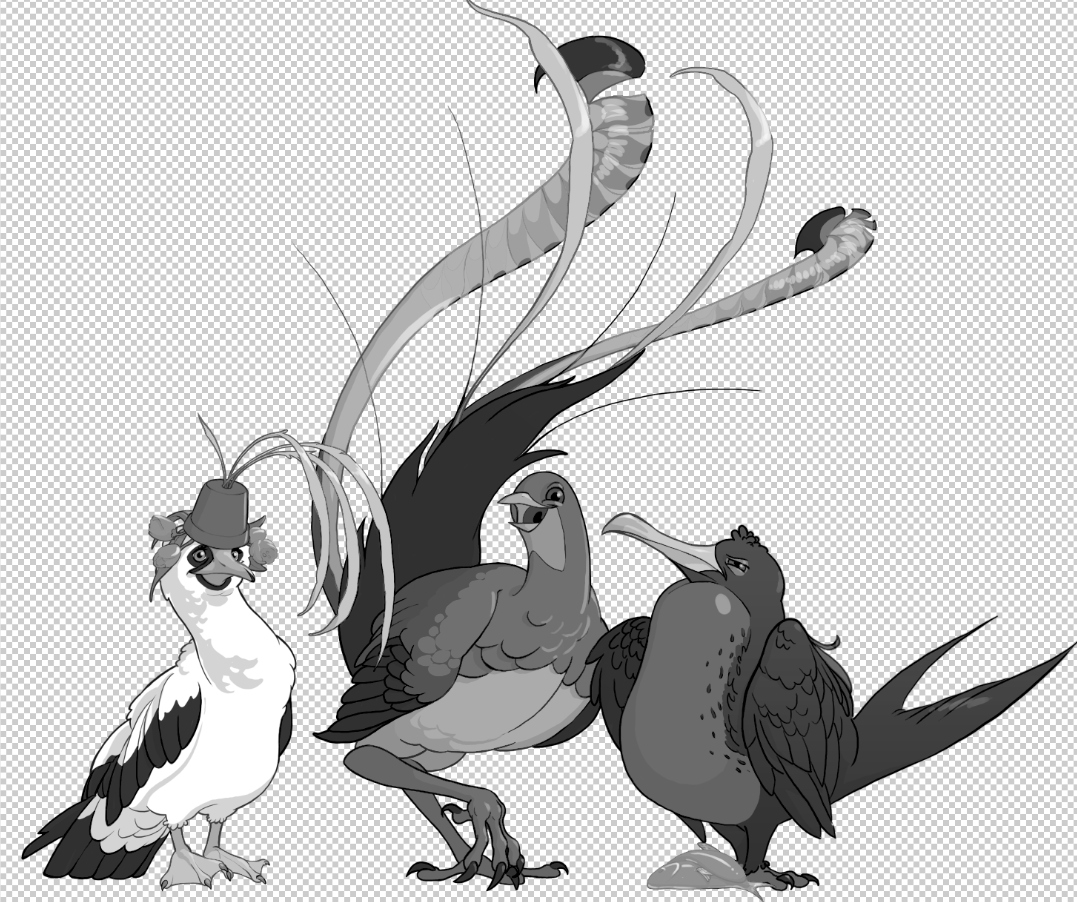
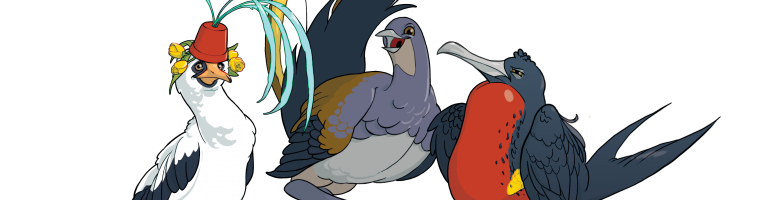
The story is narrated by an trio of avian ‘fact checkers’ in a contemporary spoof of the classic Greek chorus of ancient theatre plays that incorporates our growing awareness of ‘fake news’. And musical trailers promoting The Great Brassmonkey Bay Jewel Robbery include songs written in different popular musical genres, including jazz, rock, hip hop, country, etc.

Discovery is critical to much youth entertainment, including many games. Brio’s creative team is considering developing spin-off video games based on the book’s characters. The opportunities for young readers to learn while enjoying themselves are abundantly available to resourceful developers. Not only that, educational games are also increasingly profitable, worth $1.5 billion and growing fast, according to a 2013 US study.

After all, learning while having a good time is how most of us got our most enduring education and skills, no?

Leave a comment

Filed under HOME, Judith Lydia Who?, Liberated Arts?

Pity! Fear! Catharsis! Does Greek Drama Work on I-Phones?

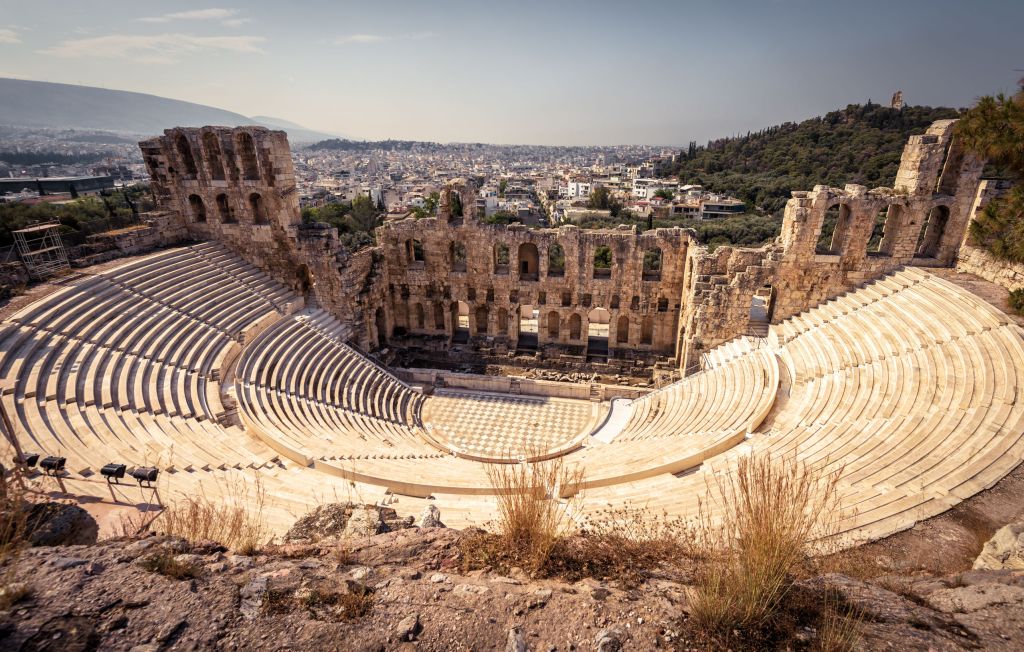
Panoramic view of the Odeon of Herodes Atticus at the Acropolis of Athens, Greece.

Are ancient literary classics still relevant at a time when some fiction works are being written on smart phones? Should young readers and writers continue to study the structure, characters, and plot of narratives written centuries ago? If so, why?

British Literary Agent Julian Friedmann thinks we should. His recent Ted Talk ‘The Mystery of Storytelling’ distills his (…well, and Aristotle’s!) ideas about what makes a successful theatrical script into a few memorable messages. He argues these are as relevant now as they were when Aristotle lived and wrote (384-322 BCE).

According to Aristotle’s trinity of essential qualities, to be successful and satisfying to audiences, a theatrical performance has to evoke pity for the hero, fear of the escalating threats he or she faces, and finally catharsis when the threat is resolved.

Blockbuster novels and films have the same demands. The structure of The Great Brassmonkey Bay Jewel Robbery, an adventure story for young readers, was based on a script structure that adheres to this formula. The twin heroes, Pax and Pip, are separated for the first time in their lives when Pip is involved in an accident at the Zoo where the twins work. When she fails to recover as expected, the twins and their family are terrified that all their dreams for the future will collapse. Pax fears he will have to face life’s great challenges alone.

The story is successful if we care enough about Pip and Pax to pity them and fear they may not be able to transcend their challenges. I won’t reveal the resolution as it risks spoiling any potential catharsis, but Friedmann’s talk is a fascinating and worthwhile reminder of why Greek tragedies have always seemed timeless to me despite centuries of change.

It also reminded me that I even included in the story a trio of avian narrators modelled on the Greek Chorus in the story! I modernized their role into fact-checkers. The job of a Greek chorus was to describe and comment on the action in a play, often through dance and song. Fact-checkers try to make audiences believe narratives are true.

Click on at link below for Friedmann’s concise insights into why writers write, what works, how British films differ from American ones, and why the best-performing theatrical stories are visual and, regardless of culture (or the sneers of critics), generally sentimental. I hope you enjoy it as much as I did: ‘The mystery of storytelling’ : Julian Friedmann at TEDxEaling – YouTube https://youtu.be/al3-Kl4BDUQ

On the subject of structure, a future blog post will review the use of nested narratives. The technique not only applies but also multiplies Aristotle’s formula, repeating and reflecting the emotional journeys of the characters for the audience like a walk through a house of mirrors.

Leave a comment

Filed under Crafting Stories, HOME, Judith Lydia Who?, Liberated Arts?

Writing for the Lockdown Generation

I started writing a book that became The Great Brassmonkey Bay Jewel Robbery in 2007. When it was published in 2020, I dedicated it to my brother, Ken, and to young readers who had a tough year in 2019-2020, whom many called the Lockdown Generation. This is part of the story of why I wrote the book and dedicated it as I did.

When I left full-time employment after twenty years with Australia’s multidisciplinary scientific research organization, CSIRO, my mortgage was paid off and a modest income secured with training consultancies. I was free for the first time in my life to fulfill my dream of being a writer. But what should I write, I wondered? There were so many stories I had wanted to tell for years.

After a few false starts, I decided on a youth fantasy. I knew I needed to radically change the communication skills I had practiced for 20 years. The nonfiction commercial and scientific writing I did as a science publisher and marketer had trained me to focus more on accuracy than creativity. Youth fantasy would stretch muscles unused since university creative writing classes years earlier, I thought, and such a modest hurdle would be mastered quickly.

Right off, that should tell you how little I really knew about writing fiction!

I went through some of the earliest of the 41 journals I have written since I was sixteen years old, looking for the story ideas I had with uncharacteristic prescience cached in them for just such an occasion. I found a narrative I had drafted in my 20s. It was based on one of the curiously cinematic dreams I used to have in those days, concerning a robbery so ingenious that I remember waking up snorting in laughter. While I had the rough nugget of a story, I won’t say I had a plan.

What I did have were some aspirations I wanted to address as a writer. One of these dated from a writers’ festival I attended in 1999. A YA author whose presentation I had signed up for took a question from the audience. Why did he choose to write bleak dystopic fiction for young readers? He answered frankly, “It sells.” And after a pause, “We can’t sugar coat what’s happening.” I experienced a jolt of concern at his words. He was referring to exposing very young readers to the adrenalin rush of terrifying environmental disasters largely caused and often ignored by adults. It seemed to me more a violation of hope more than provision of equipment for the future.

In that moment, I decided writers had a profound responsibility to their audiences, and none more so than when their readers are young. Providing thrills for money is one of the world’s oldest professions. It need not be irresponsible or harmful, but when the audience is young, it can easily become both.

There are moral obligations in all professions, but I had grown up with a mother who was sadly abused as a child, so I knew youthful trauma is often an enduring and painful legacy. I decided anything I wrote—if true to a worthwhile story—would be hopeful, a quest for solutions. That at least seemed a legacy one could exercise some control over. These notions were enough to start me writing.  

Writing the first draft of The Great Brassmonkey Bay Jewel Robbery was great fun, a self-indulgent romp during which I set no boundaries on my characters or what they could do, feel, achieve, and impact. Or, for that matter, their species. Why not make my characters animals? After all, I was fascinated by the audacious cockatoos, cheeky possums, delightful fairy penguins, pensive water dragons and exuberant dolphins I had watched while living near beaches on two sides of the Pacific Ocean.

During those years, I had often mentally assigned many of my animal visitors personalities, imagined among them dialogue and conflicts, flirtations, and turf wars. I felt surrounded by a charismatic troupe of potential heroes. As my suburbs I lived in attracted development, however, I had also watched the numbers of my heroes decline. In my characters’ evident vulnerability, I had an urgent plot theme: their survival on a changing planet.

A family illness displaced other priorities for years, so it wasn’t until the 2020 COVID-19 pandemic with its strict lockdown conditions began robbing young people of many of their most important life experiences that I began rewriting my initial draft in earnest. I looked at the plot with different eyes. All around me were stories of my intended youthful audience, of cancelled proms and graduations, of college courses that had to be attended online, and of relationships that developed despite that most disappointing of matchmakers, ZOOM.

I was impressed by the resilience of many young people who posted often hilarious videos about how to get through long periods of isolation. At the heart of many of those posts was creative good humor and a whatever-it-takes attitude to keeping in touch with friends. Those qualities seemed essential to keeping up the spirits of the film makers. I wanted to capture those attitudes and voices in my characters and narrative that might speak to readers and their families.

So I added to my troupe of characters the teenage twins, Pip and Pax. In a future post, I’ll write about nested narratives, how and why writers might consider a plot structure that positions one hero’s journey within another.

But first, here is my first author’s reading to introduce the twin Zookeepers, Pax and Pip, to The Great Brassmonkey Bay Jewel Robbery.

Judith Lydia Mercure reads from The Great Brassmonkey Bay Jewel Robbery

Leave a comment

Filed under Crafting Stories, Getting Noticed, HOME, Judith Lydia Who?

Lockdown Launches and Readings

Book launches during a Pandemic certainly pose challenges. No one wants to put readers and bookstore staff and customers at risk by organizing face-to-face readings and talks. But there are other opportunities for readers to talk with authors whose work interests them.

We are all familiar with book trailers and reviews as means of getting information about books, but many readers are also interested in hearing the author read from and describe the creative journey that resulted in their books. With more book clubs meeting by Zoom and other conferencing systems these days, growing numbers of authors are happy to drop in to meetings for discussions and readings by Zoom, regardless of where the audience may be. Short video readings from my own latest book, The Great Brassmonkey Bay Jewel Robbery, both by me and by invited guest readers, have been posted as teasers on Youtube and shared on this eqine as well as on the author and character websites. I have also joined meetings and participated in interviews by Zoom, and while those are different experiences from face-to-face meetings, a big advantage is that I can go almost anywhere, almost any time. For more information about Zoom visits and readings, email jlm@judithlydiamercure.com for details.

The Great Brassmonkey Bay Jewel Robbery is now available from bookstores and online retail providers everywhere. In addition, the publisher, Brio Multimedia, is offering the book through regional booksellers to avoid exchange rate fluctuations and delivery costs and delays. Check http://www.judithlydiamercure.com for updates.

Judith Lydia Mercure does Zoom readings of the Great Brassmonkey Bay Jewel Robbery for bookshops and book clubs everywhere

Leave a comment

Filed under HOME, Judith Lydia Who?

About ‘Gluffing’

At the risk of sounding immodest, I’m pretty sure I have the best definition of the word ‘gluff’ , even though Collins dictionary offers a sad version of it–as a sweet, sticky substance covered with fluff–like a caramel left in your pocket on a hot day.

My version is both a noun and a verb. It’s basic noun forms are ‘gluff’, ‘gluffster’ and ‘gluffmeister’. It means to bluff, glibly. Audaciously. Shamelessly, really. It includes the result of gluffing, which is a gluff.

I invented the gluff to address an unmet need. (Actually, I admit it was a group invention, created with friends at a party, as ideas we think at the time are our best so often are.)

Not too long ago, we began to encounter gluffsters everywhere, using the virtual podium the Internet has given us all. Although almost everyone seems to indulge in a moment of gluffing now and again, some enthusiasts seem particularly good at it. These people are gluffmeisters.

There is no restriction on the subjects gluffsters and gluffmeisters will take on. Although there should be an element of interesting plausibility in a gluff–to distinguish it from utter nonsense–creators require only one qualification for the role: shamelessness.

But even shameless loquaciousness isn’t enough. A good gluffster has to be interesting enough to make us think and entertaining enough to make us want to listen. A gluffmeister should introduce ideas provocative enough so we see the world differently, witty enough to motivate us to pass them off as our own.

We all know gluffsters and even some gluffmeisters. Professionally, they are known as journalists, authors, performers, scriptwriters, marketers, critics, teachers, philosophers, and politicians. This blog is a soapbox from which almost anyone may gluff about story-telling, the universal and changing insights we apply to our creation, dissemination, and understanding of the narrative arts.

Stories can be about anything, but the best lift the human spirit, inspire, console, engage, and make us weep, smile, reflect, and sometimes even transform us. But what makes one version of the fifty basic plots that encompass all stories invented by humankind seem fresh? Our engagement with and enjoyment of stories intensifies when we discover and share new perceptions and interpretations of the world we live in.

Like the salons and coffee houses of the past where interested people gathered, the Internet is the new home of gluffsters. Please join me here.

On reflection, do you think Collins’ definition of a gluff–as something sweet, covered with fluff–and the one used to describe what is practiced here might have something in common after all?

Processing…
Success! You're on the list.

2 Comments

Filed under HOME, Judith Lydia Who?