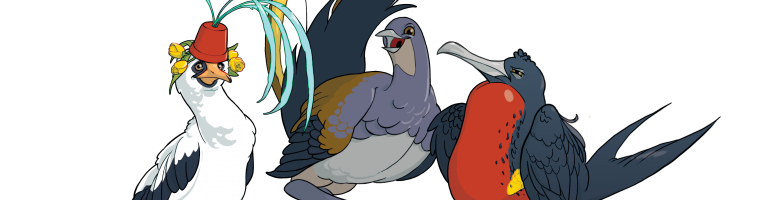
Judith Lydia Mercure: “Thanks for sharing your thoughts with The Artful Gluffster, Eliza. And thanks too for designing our blog banner! You were born in Umbria, Italy, you live in Berlin, and you work with book, comic, and film publishers and writers all over the world. You were trained both as an illustrator and a fashion designer, which have very different skill sets. Being a good illustrator must help with fashion design, but does being a fashion designer help you as an illustrator?”
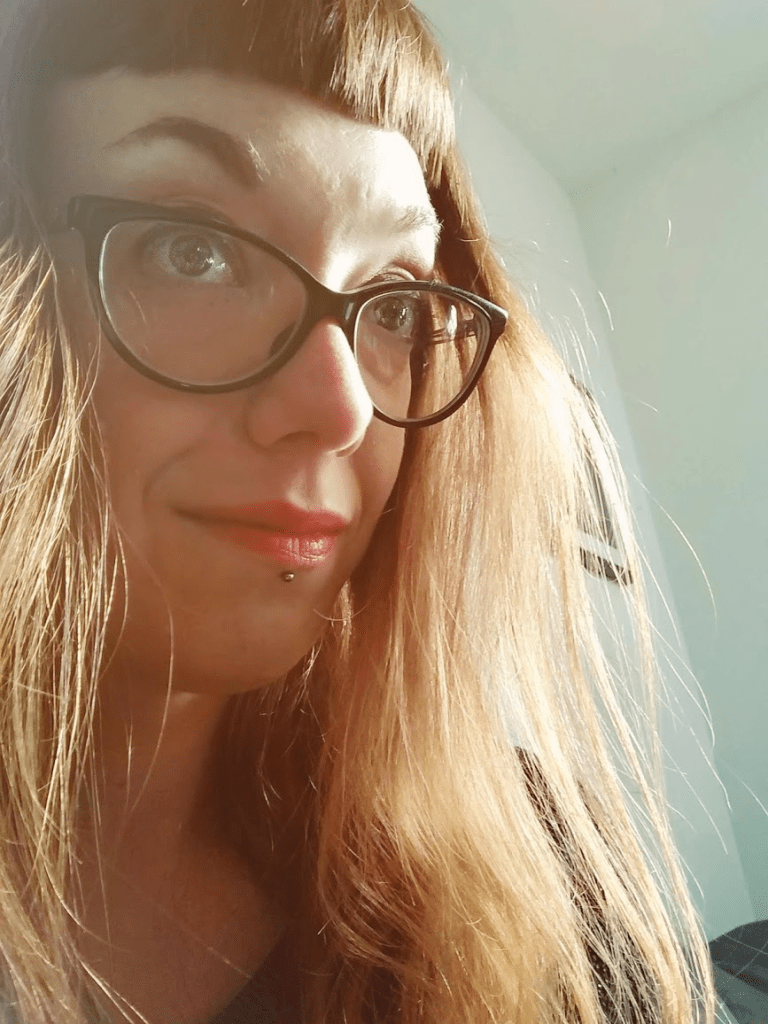
Eliza Bolli: “Sadly my experience with fashion design as a working environment was rather unpleasant. I would describe it as a ‘Devil Wears Prada’ situation without the glamour—so I quickly decided that I wasn’t cut out for it. Training for the job was fascinating and very compelling, though. I did benefit greatly from the constant exercise of identifying patterns and visual rhythms in everything I laid eyes on. It was during my Fashion Design Academy years that I truly grasped the concept of “finding inspiration in everyday events and circumstances”.
JLM: “Illustrators have to balance what is recognizable against what is distinctive. You were involved in the creation of The Great Brassmonkey Bay Jewel Robbery characters for over a year, developing some Southern Hemisphere birds and animals you’d probably never seen outside of Youtube videos. Koalas are iconic all over the world, particularly since the Australian 2019-2020 Black Summer fires, so how did you create a unique koala like Chilli?”
EB: “First and foremost: you gotta watch many koalas. So, so many koalas. The trick is to form an extensive visual library of koala-features: fur patterns, color palettes, eyes shapes, pose ranges… that you can engineer in a unique way. I find that the more plausible a character is, the better it will be perceived and received: a well-characterized koala, with its grey fur and huge nose, will work better than a koala that’s been designed with blonde fur and blue eyes just for the sake of originality.”
JLM: “How does that compare with creating a plausible image and persona for, say, a less familiar Abbott’s Booby or a Magnificent Frigate Bird, both unique, endangered birds found only on Christmas Island?”
EB: “That’s where characterization comes into play: the personality traits must be added to the design in the form of posture, expressions and mannerisms. With good character writing as a guide, a flock of white sheep can be rendered as a group of highly distinctive individuals. With subjects as flamboyant as the Christmas Islands bird species in the book, it’s even easier!”
JLM: “Some of your illustrations are engaging for children, some edgier, for adults and young adults. Do you have a favorite audience?”
EB: “From Teens up. Because those group allows my artworks to convey a whole array of undertones that younger children might miss, such as humor in all of its forms. But importantly, younger readers often prefer “simpler” designs (at least in the clients’ views; I often wonder what children think about this). And I just like details too much.”
JLM: “How would you describe your style?”
EB: “Disney-ish with a sprinkle of Leyendecker, maybe?”
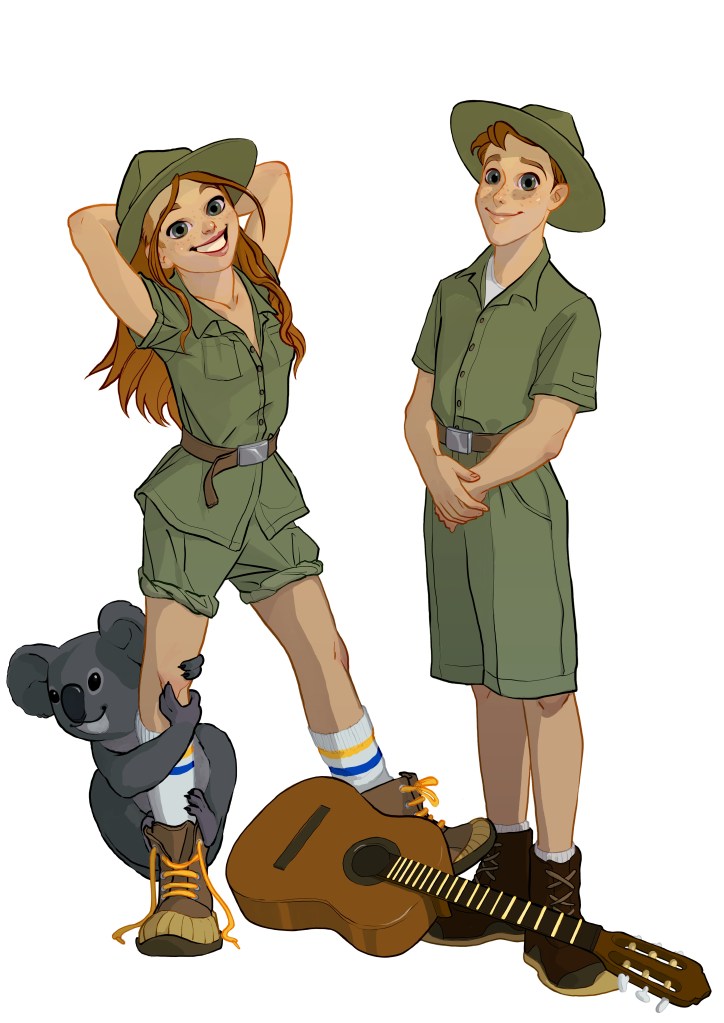
JLM: “As an artist, what is your responsibility to your characters? For example, how do you feel about anthropomorphizing animal characters, especially endangered species whose habitats, behaviors, and even existence are threatened by human excesses?
EB: “My personal responsibility towards my characters mimics my personal moral code. There is a specific cluster of subjects that I refuse to represent with my craft as paid work. Anthropomorphizing animals doesn’t trouble me. Like many kids, I grew up watching Donald Duck eat chicken legs and seeing happy pigs as butcher shops’ signs. In fact, I designed one of those signs! Depicting an animal standing on hind legs and wearing a hoodie like the Magic Island Gang is not intrinsically troubling for me. If I were asked to draw it poaching elephants for ivory, or doing something else that demeans any character, human or otherwise… that’s another matter entirely!”
JLM: “The Artful Gluffster focuses on how technology and marketing is changing the arts. Apart from access to new graphics and communications tools, what strikes you most about how technology is changing your industry and the expectations of the audience?”
EB: “Technologies are helping more and more people get in touch with their creative side without submitting to a classic training. For professionals, a growing toolkit of resources is helping cut completion times and helping enhance our results. Meanwhile, social media and communication tools allow everybody to discover talented people beyond geographical boundaries. But while technology gives us amazing tools, it is not what shapes our industry. It isn’t Photoshop that demands complex artworks at derisory payments. It isn’t Instagram’s fault if more and more jobs are awarded to creatives from developing countries. It isn’t Pinterest that steals a humongous amount of original art from online portfolios and uses it without paying royalties. That’s capitalism operating in ethically unregulated free-market economies. We know elite artists experienced fair-pay challenges by exploitative patrons in the past too. But the experience is too commonplace now.”
JLM: “Let’s get hypothetical: Would Michelangelo or Caravaggio have been as great as artists if they had trained on Photoshop and Illustrator?”
EB: “I’m pretty sure they would be even better…”
JLM: “Would they have been as successful if they had had to market their personalities and networks on the Internet before anyone would look at their portfolios?”
EB: “Now that’s a game changer. Michelangelo wasn’t known for being a socialite so I doubt he would have bothered to open an Instagram account to begin with. Caravaggio would have wasted too much of his creative time trolling away as he was a renowned troublemaker. Leonardo would have done great in my opinion. The guy just loved to dabble with technologies. He would probably work at Boston Robotics now!”
JLM: “The Great Brassmonkey Bay Jewel Robbery was a relatively small job. Is there anything about such jobs that are worthwhile for you?”
EB: “I was delighted to work on TGBBJR: it gave me the opportunity to further develop my character design skills by drawing adorable and fascinating animals–and it was for a cause I think is noble. My 10 year-old self (a long-time WWF member, animal-nerd, bookworm, wannabe ethologist and Disney animator) can finally be proud of me!”
Find Eliza Bolli: On Facebook:
https://www.facebook.com/Eliza.Bolli.ArtWorks/
On Behance:
https://www.behance.net/elizabolliartworks
On Instagram:
https://www.instagram.com/eliza.bolli.artwork/
 The Artful Gluffster