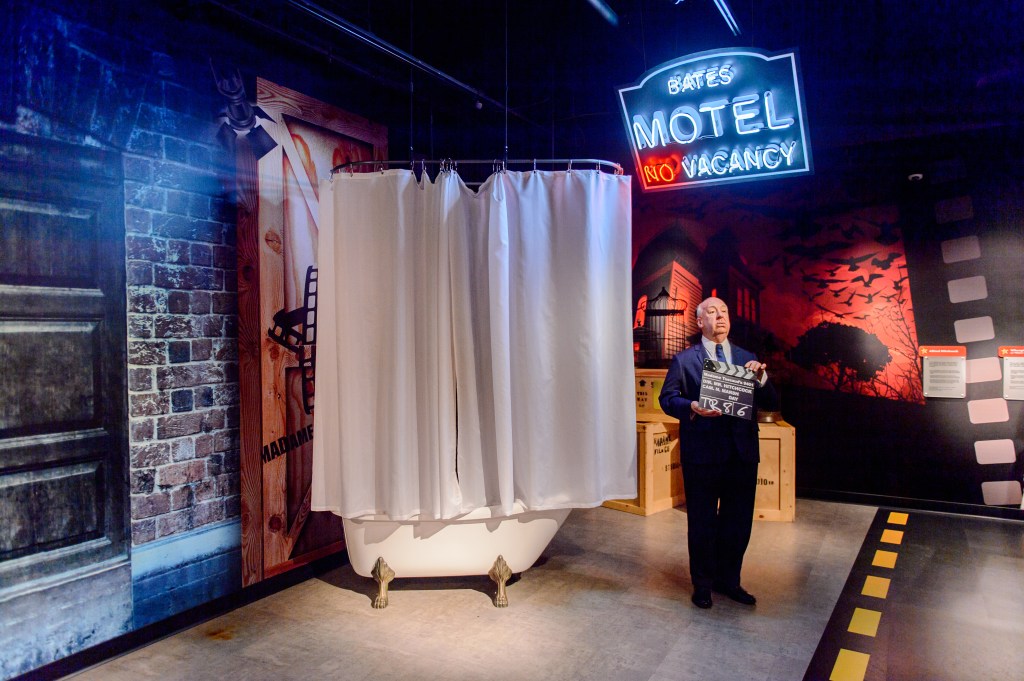
Long before social media and phone cameras gave us the photobomb, Alfred Hitchcock was infamous for putting himself into his films as an obscure character or ostensible crowd scene extra. But why? Of course, a part of his motivation may have been vanity. Why should actors get the all the glory? Certainly, many Directors followed Hitchcock’s model. Martin Scorsese notably gave himself a part in Taxi Driver. In films, this practice was usually referred as a cameo, a brief appearance or voice part by a famous person in a performance.
Popular actors have often been given cameo roles, presumably by Directors, to add depth and novelty to films. Keanu Reeves’ send-up of himself in Always Be My Maybe and Paul McCartney’s appearance as Jack Sparrow’s uncle in Pirates of the Carribbean (in which he sings ‘Maggie Mae’ from the Beatles’ album ‘Let it Be’) are audacious in-jokes, fun to spot, hugely entertaining, and often the stuff of cult films. The practice was and continues to be highly successful as a creative marketing tactic.
Cameos appear in other art forms for cathartic reasons. In paintings, graphic artists have often elevated those they adored into gods or heroes. Sometimes, they graphically eviscerated unfaithful lovers. Indeed, Hieronymus Bosch shredded plenty of chaps he wasn’t fond of in the maws of monsters, boiled them in lava, or drowned them in fecal soups, and I’m sure it made him feel better.
Fiction writers also get a kick out of cameos. They appear to have done so for ages. Among the authors who have inserted themselves into their own narratives were Geoffrey Chaucer, Orhan Pamuk, Martin Amis, Ray Bradbury and Stephen King, among many others. Sometimes authors deliver enlightening instructional commentary to clarify the plot or the author’s perspective.
Some authors create straw-man characters in their own image and then attack them for their weaknesses. It beats getting sued for defamation. This isn’t always a popular technique, however. Ray Bradbury is reported to have appeared in some of his own books and in so doing offended some readers who considered themselves perfectly capable of unraveling plot twists or deciphering the story’s moral message unaided.
The temptation to insert the artist into the artwork is, therefore, not rare. Personally, I believe the reasons for this are perfectly understandable. It may be in the nature of artists. They can’t help themselves. Scriptwriters often report that they ‘hear voices’ of their characters in their heads when writing a performance or film script. They mentally rehearse dialogues between multiple characters. The temptation to slip into someone comfortable must be as irresistible as a frothy bit of underwear (or none at all) when someone delicious is dropping by. Because it is fun. It is how artists play–which is what at least some art should be.
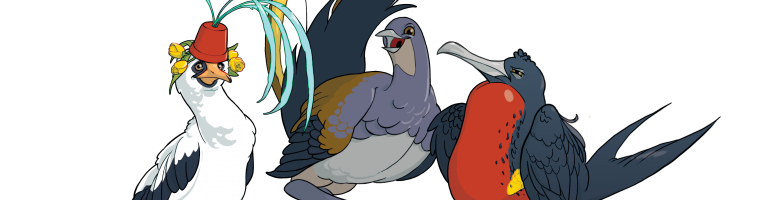
Speaking for myself, why do I use literary cameos? The three birds (in the masthead) who become the Bush Telegraph at Brassmonkey Bay Zoo are observers and commentators of the Shakespearean ilk. A Superb Lyrebird and a Magnificent Frigate bird (those are their actual taxonomic handles, by the way) are obviously avian celebrities. Who would fail to be tempted to create cameo spots for them? Moreover, as anyone who has read The Great Brassmonkey Bay Jewel Robbery knows, they are also Gluffmeisters and deservedly represent the personality of this blog.
But when I hid the modest ‘Gran’ behind the curtains in The Great Brassmonkey Bay Jewel Robbery, I was perfectly aware that she was…me! Why did I create her? She doesn’t illuminate the action. I didn’t really want to identify with an elderly stereotype waggling an educational finger at the young twins, Pip and Pax.
Gran’s job–and mine–was simply to cheer on the twins. She loves them, she wants the best for them, her opinion is important to them, and she wants them to know that she wants them to follow their dreams. Her point is emphasis. Encouraging readers is one reason why we might decide to write in general and why we might write cameos into our stories in particular.
 The Artful Gluffster